
The Districts of Montalcino
The four Districts of Montalcino: Borghetto, Pianello, Ruga and Travaglio, represent the town’s beating heart and the soul of its social life.
For Montalcino, the Districts symbolise associations of considerable importance, as they involve all the generations of the town, not only during the traditional identifying festivals but also in initiatives and events that bring the town to life all year round: literary prizes, competitions, publications, cultural meetings, recreational activities, celebrations, social outings and much more: the vitality of the Districts is a constant and essential presence for the community.
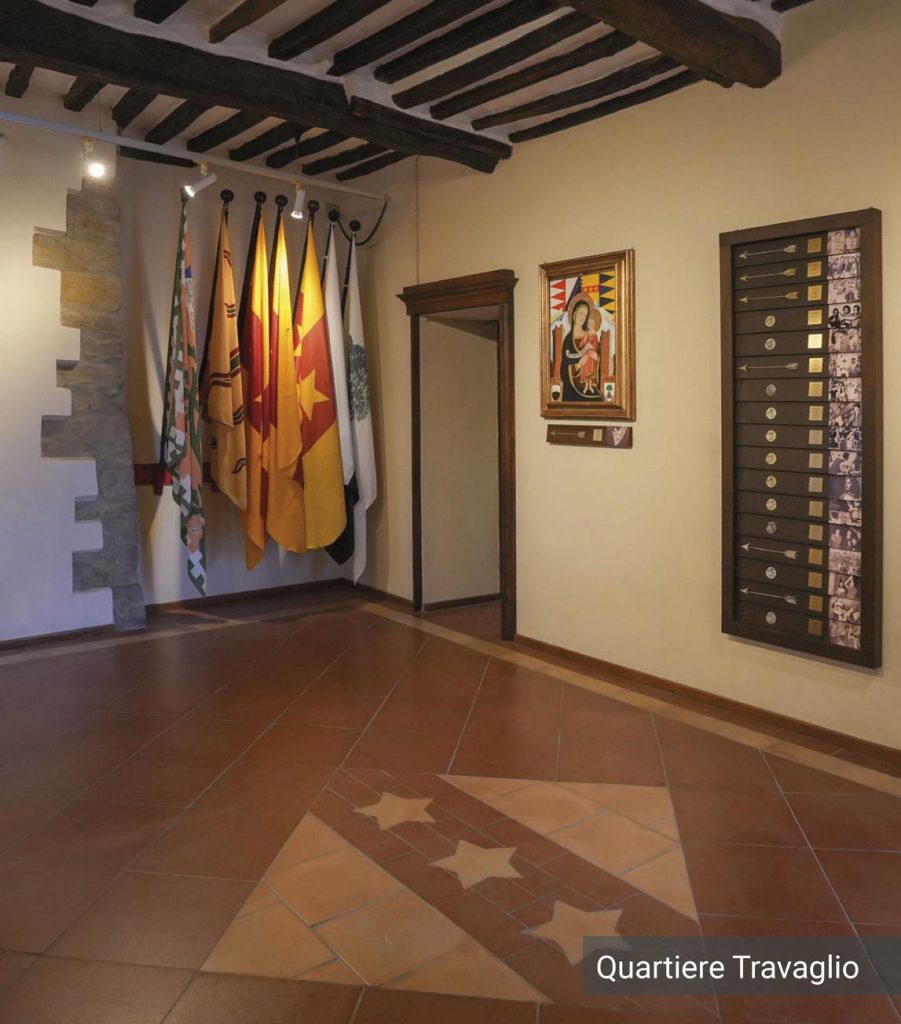
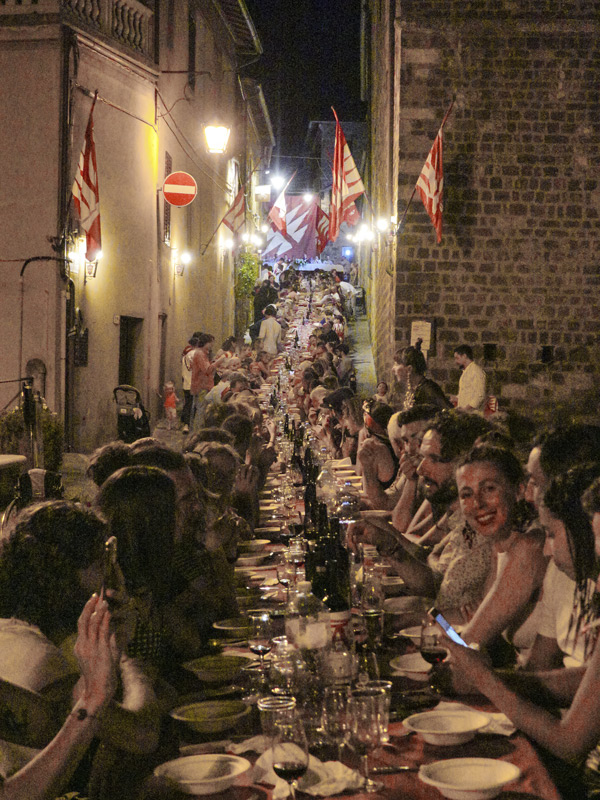
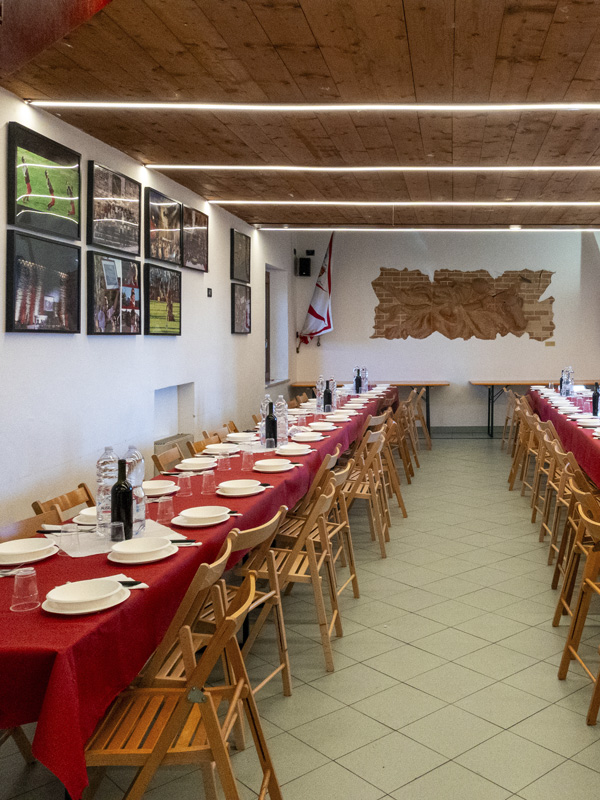
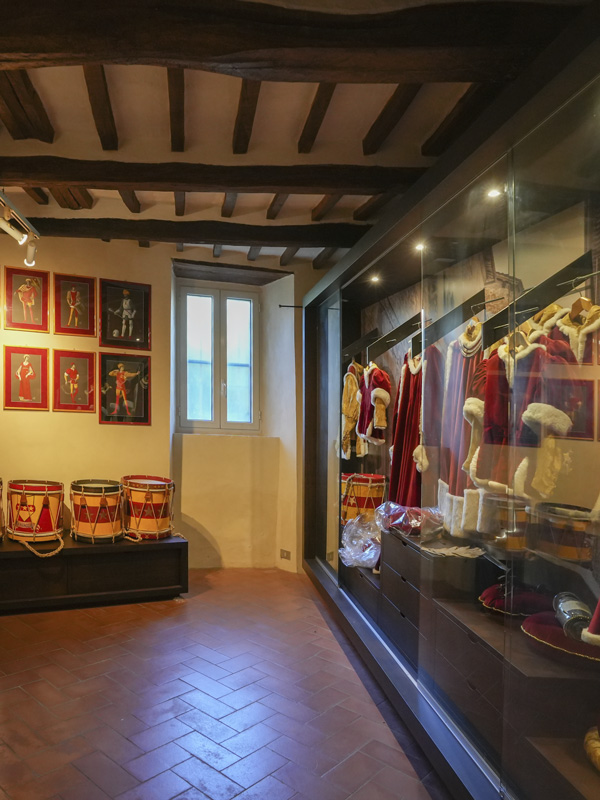
The headquarters and societies scattered throughout Montalcino old town are the hub of the local social life and the meeting point between generations. Amongst other things, these are the places where each District keeps its costumes, silver and gold arrows and medals, along with the works of art won in the Archery Tournaments.
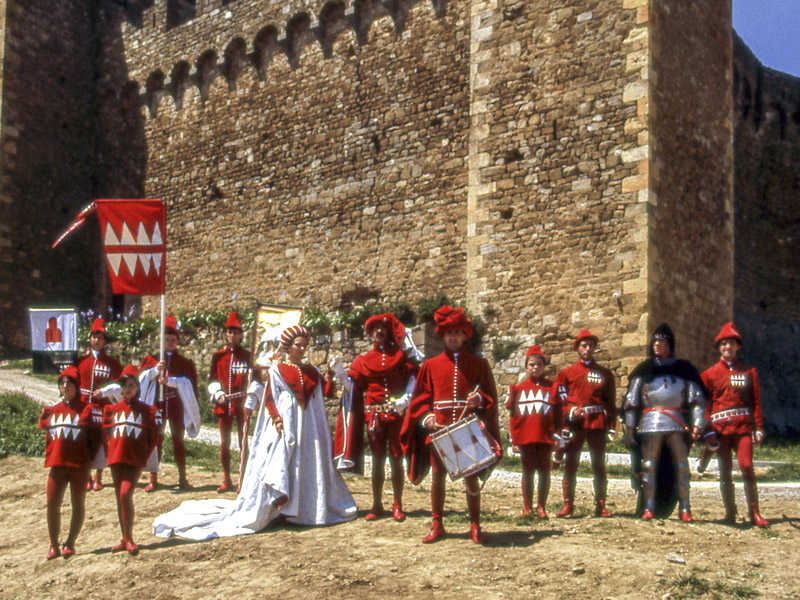
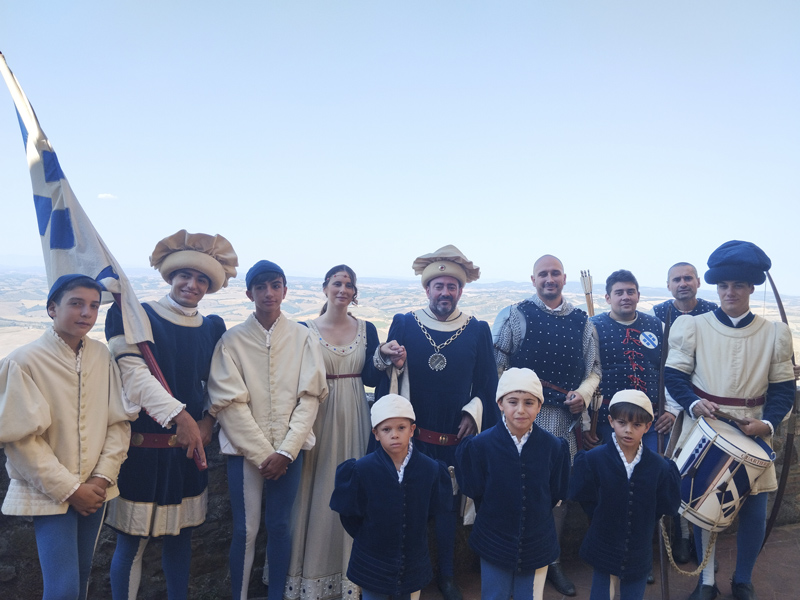
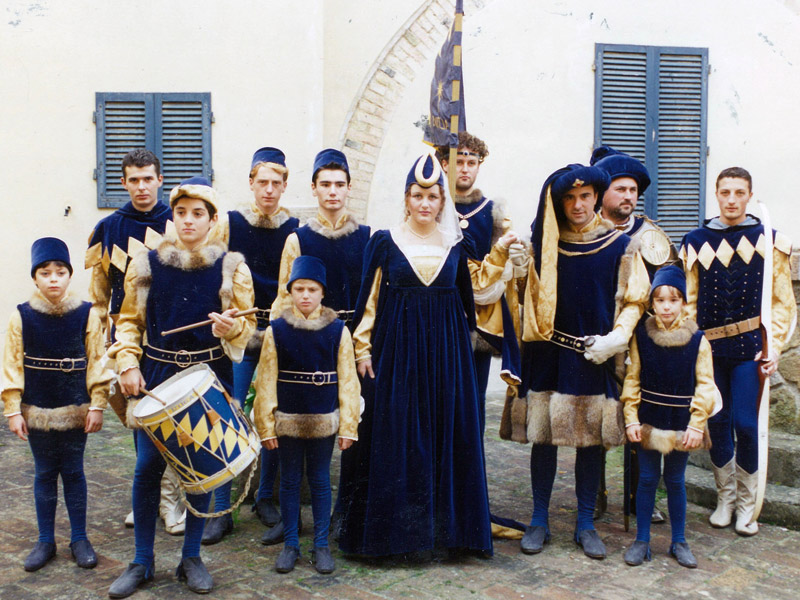
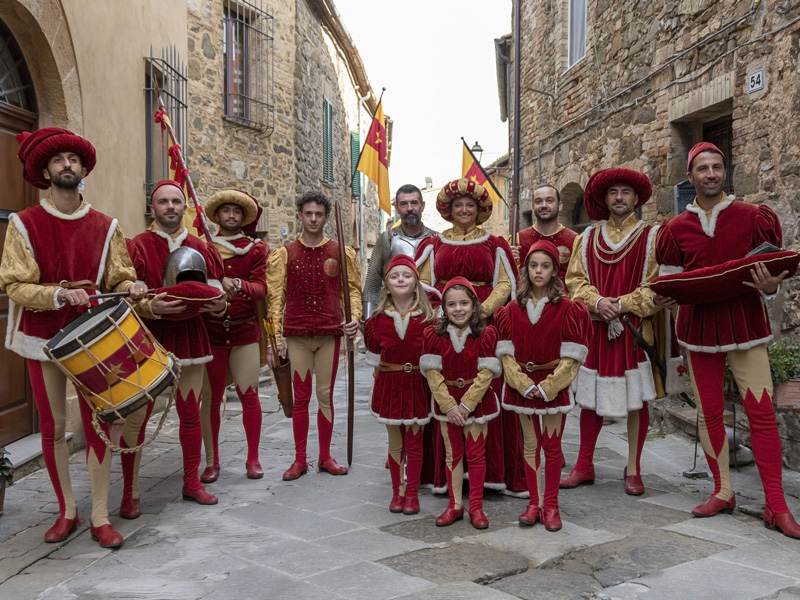
The official representation of each District parades in the Historical Procession during the Sagra del Tordo, the Opening of the Hunts and the Offering of the Candle to Maria Santissima del Soccorso, the town’s patron saint.
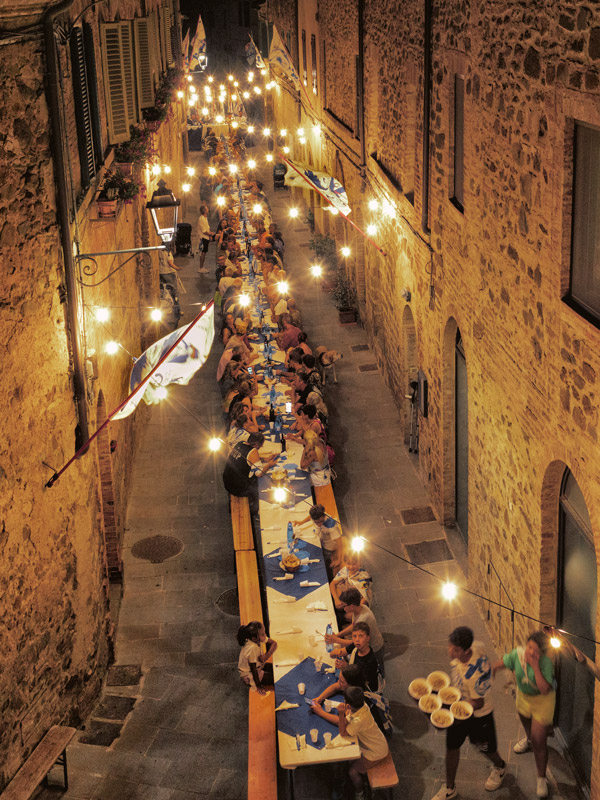
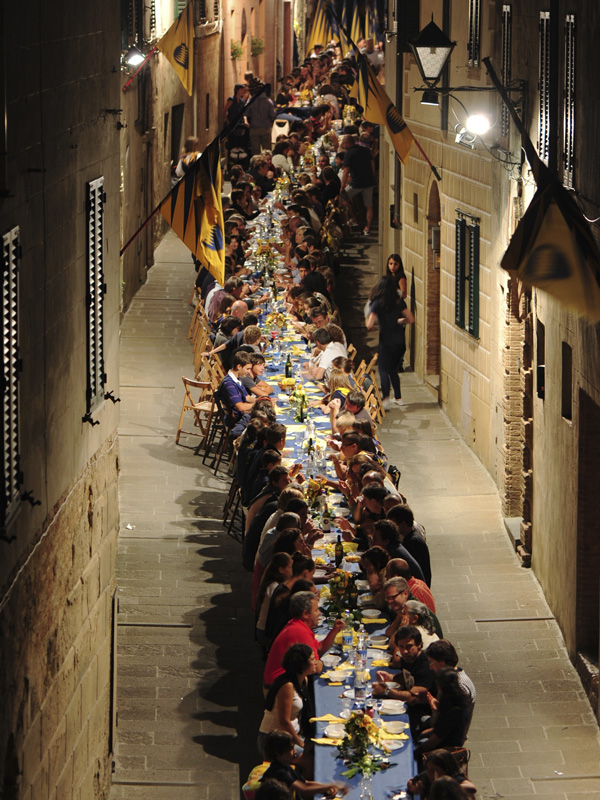
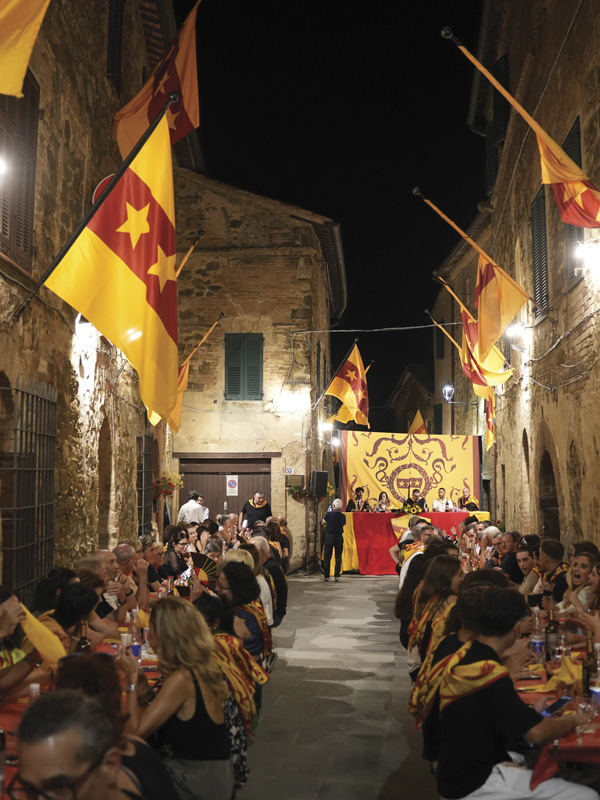
The Opening of the Hunts and the Sagra del Tordo represent the highlight of each District’s social life. The months of August and October are definitely the busiest for every member of the District. Particularly in view of the last Sunday in October, the day on which the Sagra del Tordo takes place, the people of Montalcino meet at their headquarters to work together, preparing traditional dishes to serve to guests who come from out of town, practising the drum roll, readying costumes, practising their archery skills, and also simply spending time together, providing a valuable opportunity for the older and newer generations to unite and strengthen their sense of belonging and shared traditions.

Quartiere Borghetto
Ut ardeant ardeo
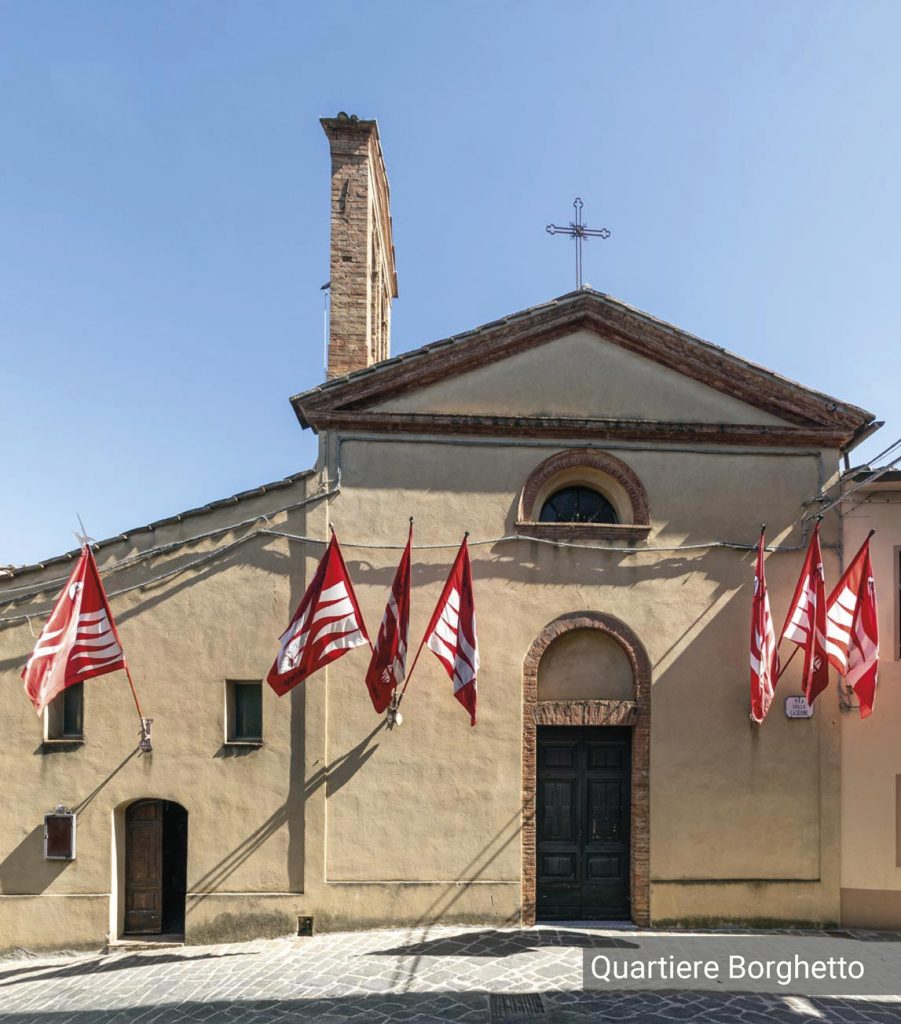
Borghetto, together with the other Districts, is the beating heart of Montalcino, the repository of its traditions and history.
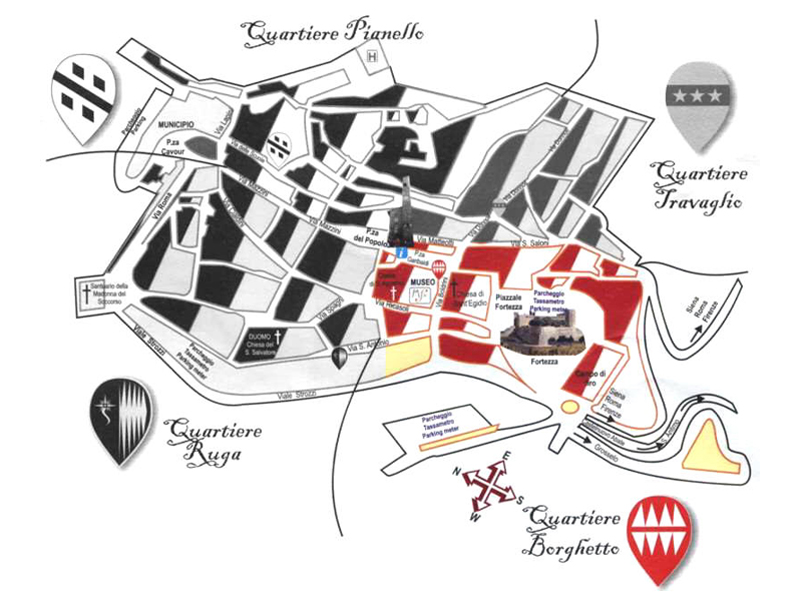
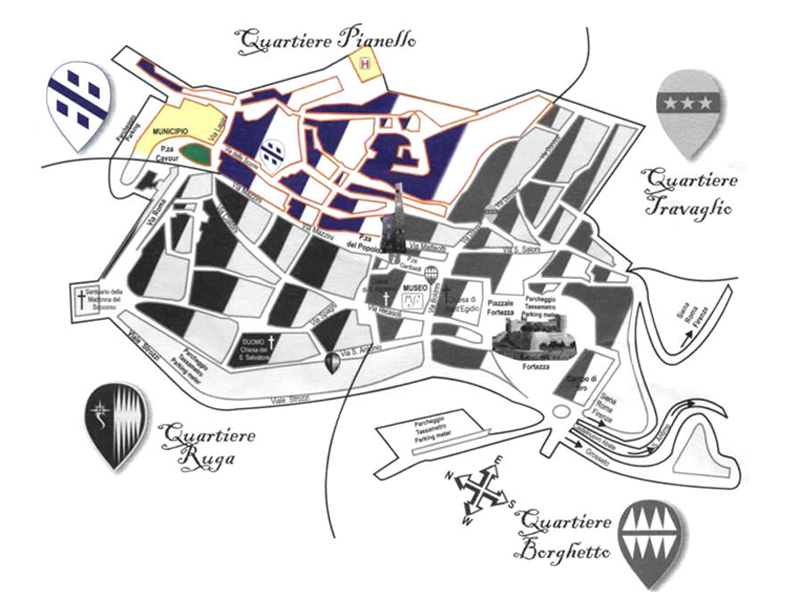
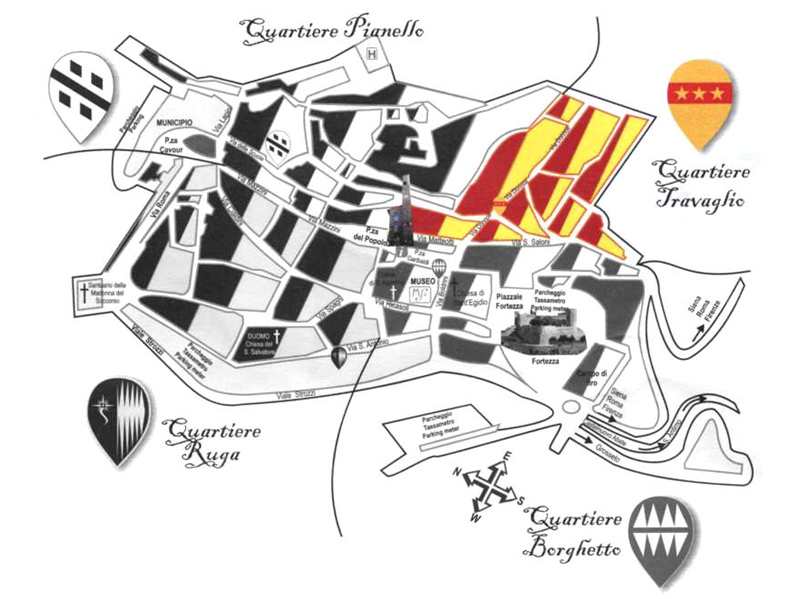
It was officially established on 29 October 1961.The name ‘Borghetto’ originates from its historical position: a village – or ‘borgo’ – in its own right, positioned around the Fortress, almost self-sufficient and bustling with activity.Its territory, which falls entirely within what was once the 14th-century Terziere di Sant’Egidio, stretches out in the shadow of the Rocca, in the high, southern part of the town. It extends from the Keep of San Martino across Barlanzone, descends as far as Porta Cerbaia, continues along Via Soccorso Saloni and Via Matteotti as far as Town Hall, then climbs to the Church of Sant’Agostino and Palazzo dei Pieri-Nerli, to reconnect with the Fortress, along the castle walls, to the ramparts of San Giovanni with Porta al Cassero.The Borghetto District’s insignia consists of eight white vertical flames against a red background. The third colour is black. The District’s coat of arms can be accompanied by the effigy of Saint Egidio, protector, and the helmet of Panfilo dell’Oca, a brave knight from Montalcino. Another historical symbol of membership of the District is the emblem of Panfilo dell’Oca, a black knight on a red background, bearing a shield decorated with three red mountains on a white background. The Borghetto motto is: ‘UT ARDEANT ARDEO’ (I burn so that they may burn). The District’s headquarters is in Via Panfilo dell’Oca.
The District celebrates its patron saint, Saint Egidio Abate, on the first Sunday in September and participates every year in the collective events with which the people of Montalcino celebrate and re-enact their traditions, their history and their culture: the Tribute to Maria Santissima del Soccorso, Patron Saint of Montalcino, held every year on the 7th of May, the Tournament for the Opening of the Hunts, the Tournament of the Sagra del Tordo and the Special Tournaments.The District organises and hosts many other events, including Il Mese Bianco-Rosso in April, the Alfredo Cellini cooking contest, and Music Circus, a two-day music festival that has become an important event for the entire community, organised every year on the weekend between the end of May and the beginning of June.
Borghetto is committed to supporting the education of young people with two scholarships funded by the District, one dedicated to Roberto Franci and the other to Simone Burgassi, for middle and high school students.
With all these initiatives, the District not only celebrates Montalcino’s history and culture but also endeavours to reinforce solidarity between its members and the whole community, defining its essential role.
- Phone: +39 3494340220
- Phone: +39 3921733775
- Email: qborghetto@gmail.com
- Address: Via Panfilo dell'Oca | Montalcino
- Website: quartiereborghetto.org

Quartiere Pianello
Micat in vertice
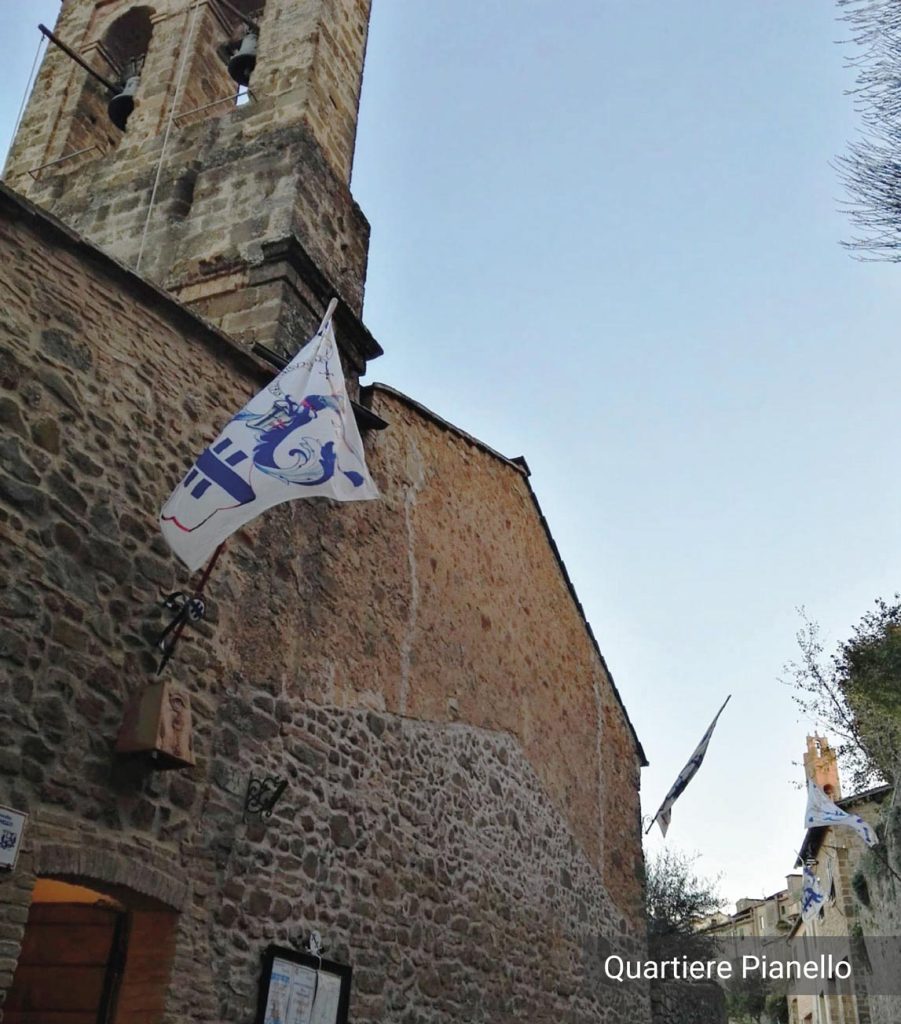
Pianello, a part of the territory of Montalcino with narrow streets that offer breathtaking views, is an important piece of history for the entire Montalcino community.
It is easy to imagine why a substantial part of the territory of Montalcino was given the name Pianello. The houses here were built following the contours of the hill from which our ancestors snatched pieces of land, creating a unique connotation with the gardens, which are often real fields that intrude between the streets of the town.
You only need to walk across the grass of San Francesco, historically the Poggio di Sant’Angelo in Castelvecchio, along Via Moglio as far as the Piaggione , which leads into Via Donnoli, to understand why it was given this name: the street is almost completely “in piano” – or “flat” – compared to the others in the old town and to the steep and uneven “chiassini”, created as short cuts, which put a severe strain on the stamina of those who climb them to reach the Piazza or Via Cialdini.
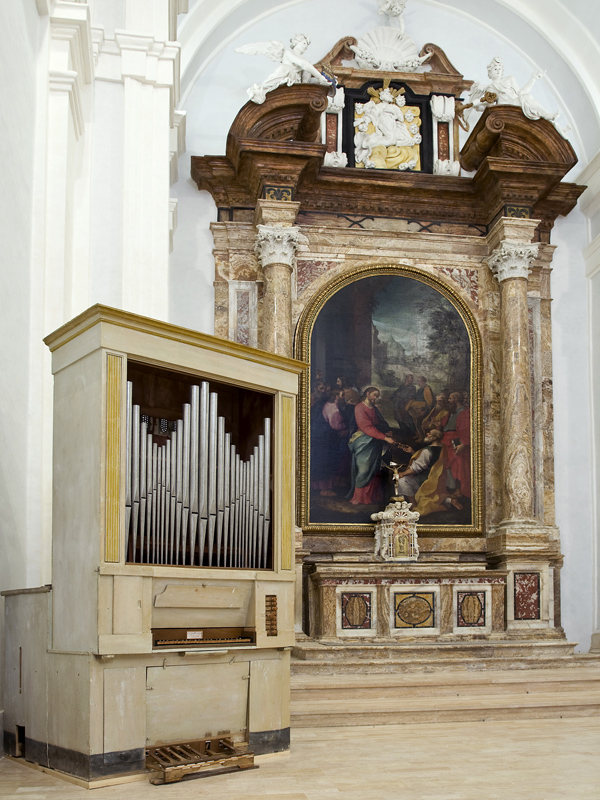
This corner of Montalcino is home to the District’s headquarters, the gardens where social activities and dinners are held, the castle fountains, the Church of San Francesco, and the most cherished gift of all, the Church of San Pietro, owned by the District since 2001 and restored in 2009, recovering the beautiful organ, the 17th-century bell and late 16th-century paintings by Ventura Salimbeni.
The District celebrates its Patron Saints, Peter and Paul, on the last weekend in June.
Pianello takes part in the town’s institutional events, with the annual Offering of the Candle in honour of the Madonna del Soccorso on the 7th of May, the Opening of the Hunts and the Sagra del Tordo. It organises numerous events of an associative nature within the District such as St Patrick’s Day on the 17th of March, with an Irish dinner accompanied by music; the Celebration of its Patron Saint, Peter, on the 29th of June, with various activities, including an archery contest between the archers of the District and a beer festival with live music. A Christmas concert at the Church of San Pietro and a celebration of Epiphany are also organised by the Pianello youth group during the Christmas period.
- Phone: +39 3470670903
- Email: quartierepianello@gmail.com
- Address: Via delle scuole, 3 | Montalcino
- Website: quartierepianello.it

Quartiere Ruga
Altivs
The Italian word ‘ruga’ can have several meanings and sounds similar to the Spanish ‘rua’ and the French ‘rue’, meaning street or road.
One of its meanings is ‘wrinkle’, a long, deep furrow that becomes more prominent as life goes by and indelibly marks the face of every man and woman – just like this street, which characterises an entire District. Only the postman calls it Via Cialdini; those who walk along it, live on it or gravitate around it, call it ‘la Ruga’.
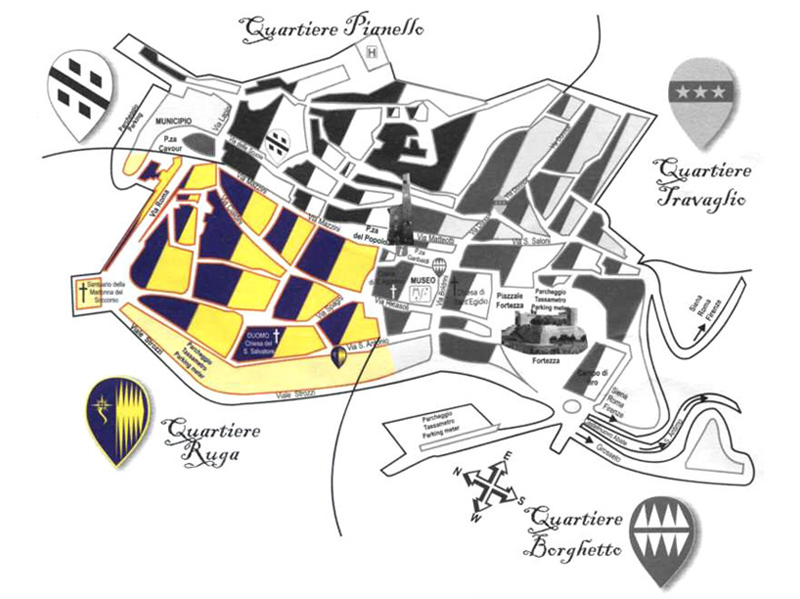
The Ruga District occupies the north-west quadrant of Montalcino’s old town; its boundary extends southwards from what is now Piazza Cavour, along Via Mazzini, to Piazza del Popolo, turns west along the Scale Bandi and climbs up between the Church of the Convent of Sant’Agostino and the Church of the Corpus Domini until it meets the walls on Viale Pietro Strozzi. Here, the boundary skirts ‘il Poggio’, meets the Sanctuary of the Madonna del Soccorso and descends eastwards to the Postierla, arriving in Piazza Cavour.
We could say that the Ruga territory coincides with the territory of San Salvatore, establishing an ideal connection, not to impose any distinction, but rather to promote the affection and care lavished on Montalcino, based on an ever-increasing knowledge of the area.
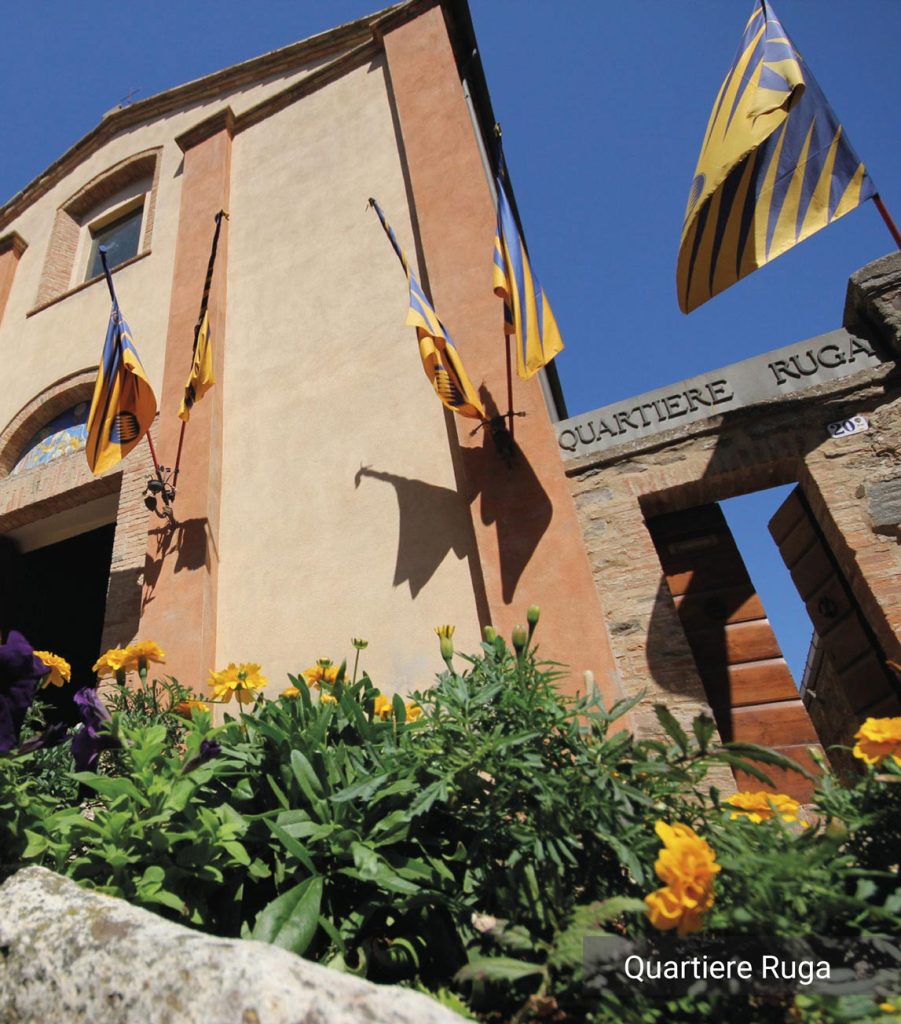
The colours are blue and yellow, trimmed with red.
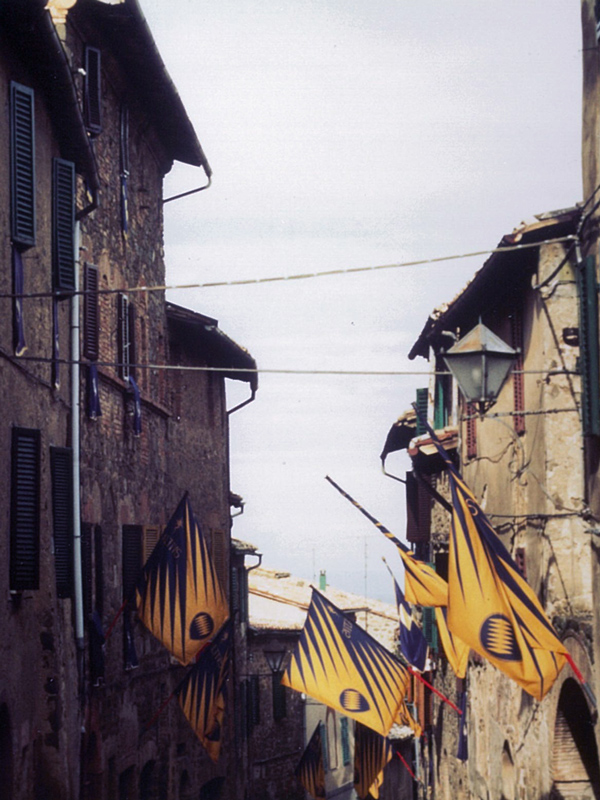
The flag is blue, edged with two stripes, the outer one yellow and the inner one red; it is crossed diagonally by six yellow diamonds with the coat of arms and the motto ‘ALTIVS’ (the highest point) in the outer corner.
The coat of arms consists of a blue shield, divided vertically into two parts; inside, there are six yellow diamonds on the right side and an ascending comet on the left side.
The Patron Saint of the District is the Holy Saviour, celebrated by the Ruga on the third weekend in June.
Like the other Districts, by Official Charter, the Ruga District takes part in the procession for the Offering of the Candle to Maria Santissima del Soccorso on the 7th of May, as well as the Opening of the Hunts and the Sagra del Tordo. In addition, it organises lively social activities throughout the year, such as the traditional Pinceria in January, the ‘Pope di Pasqua’ laboratory at Easter, the Memorial in memory of Silvia Capitani with an Archery contest between archers from the Districts, and the traditional ‘Costolone di carnevale’ to celebrate Carnival. Another important event is the celebration of the Patron Saint, San Salvatore, in June, with the organisation of various activities, including the Ruga Summer Fest, music and food in the name of fun.
- Phone: +39 347 3083262
- Email: info@quartiereruga.it
- Address: Piazzetta Sant'Agostino | Montalcino
- Website: www.quartiereruga.it
Quartiere Travaglio
Primi in campo, primi sempre
The origins of the Travaglio District can be traced back to one of the four settlements that emerged on Colle dei Lecci in around the year 1000. The settlement was subsequently divided into Terzieri, and the territory of Travaglio formed the terziere ‘ad Ostro’ (southern), that of Sant’Egidio.
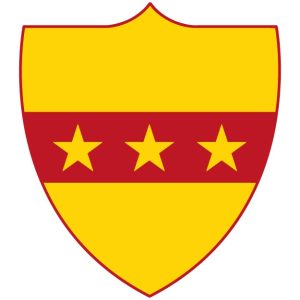
According to the Official Charter, the District’s coat of arms is ‘gold, with a red fess, charged with three golden stars’.
The flag features the same symbols as the heraldic insignia. The territory of the District extends south, as far as Porta Cervara, to the right of Via Saloni, Piazza Tamanti and Via Matteotti. Porta Cervara, an important gateway to the town, is one of the District’s most significant monuments, along with a number of elegant buildings, including those belonging to the historic Donnoli, Costanti and Valentini families. The District is a living entity, active all year round thanks to the determination and energy of its members. It aims to uphold the highest traditions of Montalcino’s history, to strengthen and develop the social and moral life of its people, and to nurture solidarity among the District’s members. It takes part in the institutional events held in the town, such as the ceremony for the Offering of the Candle to the Madonna del Soccorso, the Tournament for the Opening of the Hunts, and the Sagra del Tordo. The important annual events celebrated by the District include the festivities for the Patron Saint, San Donnolo Donnoli, where the traditional Giallo-Rossa night takes place, colouring the day with banquets and music, the Memorial commemorating the archer Alessandro Giannetti, and the poetry contest ‘Il Vignolo’.
- Phone: +39 3402421857
- Email: info@quartieretravaglio.com
- Address: Via Donnoli, 56 | Montalcino
- Website: www.quartieretravaglio.com
Historical notes
In 1961, the local board EPAST proposed the creation of the four Districts of Montalcino (Borghetto, Pianello, Ruga, Travaglio) to increase participation in the Sagra del Tordo. A cross was drawn ideally from Piazza del Popolo to identify the four sections of the historic centre, thus assigning each one to a district.
The colours of the Districts, red, yellow, blue and white, were assigned by drawing lots. The coats of arms are inspired by those carved on one of the towers of the Fortress. The first costumes consisted of a standard bearer and two pages; today, each district is represented by 12 participants.
The first challenge between Districts, in 1961, was for the “best representation in costume”. A year later, in 1962, the Archery Contest was introduced in order to award victory objectively.